





A nighttime street scene featuring a row of lit white colonial-style houses with wrap-around porches, flanked by oak trees draped in Spanish moss.

Heat Pump Installation in Tahlequah, OK

Tell us about the job

Takes about a minute. No obligation.

New system or replacementHeat PumpCherokee County, OK
Step 1 of 2

What ZIP code is the job in?

Cherokee County saw 117 severe weather events between 2015 and 2024. Damaging wind came through 58 times, hail 38 times, and 12 tornadoes touched down in that same stretch. An outdoor heat pump unit sits outside through all of it, exposed to wind-driven debris and hail. Nine winter storms hit the county in that period too, and a heat pump depends on grid power to run, for heat as much as for cooling. Statewide, a quarter of Oklahoma households lost power for 24 hours or more in 2024. Where the installer places the unit, and what backup you have for an outage, matters as much here as the equipment itself.

7 months
October through April, your system heats
5 months
May through September, it cools
30°F
the average winter night it heats against
90°F
the average summer afternoon it cools against
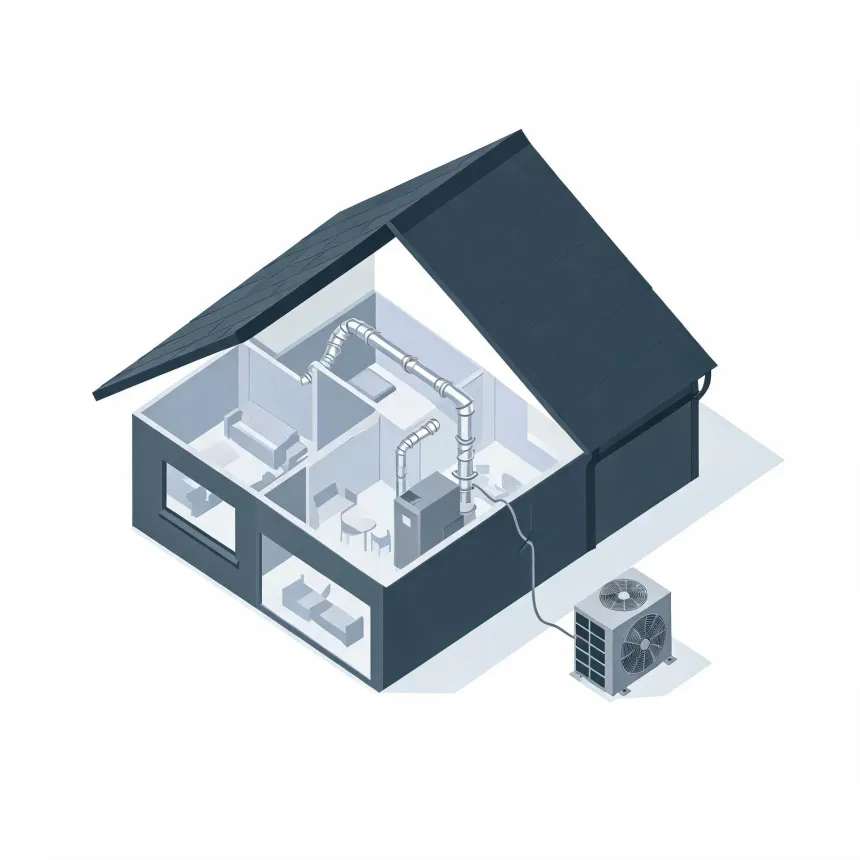
Isometric illustration of a cutaway house showing interior rooms with furniture, a furnace and ductwork, connected by a line to an outdoor condenser unit on the ground outside.
Your system heats October through April and cools May through September.

NOAA nClimDiv, 1991–2020 normals

Electricity in Cherokee County runs 12.40 cents per kilowatt-hour, cheaper than most of the country.

A top-tier efficiency model takes longer to pay for itself here, so picking a heat pump for reliability matters more than chasing the highest rating.

Almost half the county already heats with electricity

47.2% of homes heat with electricity
Climate zone 3A
Power here costs 12.40 cents per kilowatt-hour

Any heat pump installed here now has to clear a federal efficiency floor: at least 14.3 Btu of cooling for every watt-hour it draws over the summer, and at least 7.5 Btu of heat per watt-hour over the winter. Cherokee County falls in climate zone 3A, warm with a long cooling stretch and a short mild winter, and the region's rule for straight air conditioners goes further still, 14.3 SEER2 for anything under 45,000 Btu/h. That rules out the older, cheaper units some contractors still have sitting in a warehouse. It also means two systems that both meet the minimum can still differ in how they hold up to the wind and hail this county sees, so the rating on the sticker is a floor to check, not the only thing to compare.

Plan the install around the weather it has to survive

Ask the installer where the outdoor unit will sit and what will shield it from wind and hail. Ask what happens to your heat and hot water if the power drops for a day. Settling that now, as part of the install, is easier than sorting it out after a storm.

Find a contractor
A man in a cap, gray T-shirt and tan work pants carries a canvas tool bag up porch steps toward a dark blue front door of a gray clapboard house, with a potted plant at left.
A gray heat pump outdoor unit mounted on a concrete pad next to a residential house with lap siding and stone accents.

Seven months of the year, this is your heat

Heat here runs October through April, seven months out of twelve, with overnight lows averaging 30°F across December, January and February. That is most of a year spent depending on the system you put in. Get the install done before October and it happens on a day you pick, with time to walk through unit placement and backup power before you need either one. Wait until the first cold snap and you are choosing a system while your house is already cold, which is a worse time to make any of those calls.

The old equipment has to come out first

Disconnecting the old system means breaking the electrical connections, recovering the refrigerant from the lines, and unbolting the indoor and outdoor units from wherever they're mounted. A licensed contractor has to recover that refrigerant properly rather than vent it, so factor that step into the job even if the old unit barely runs anymore.
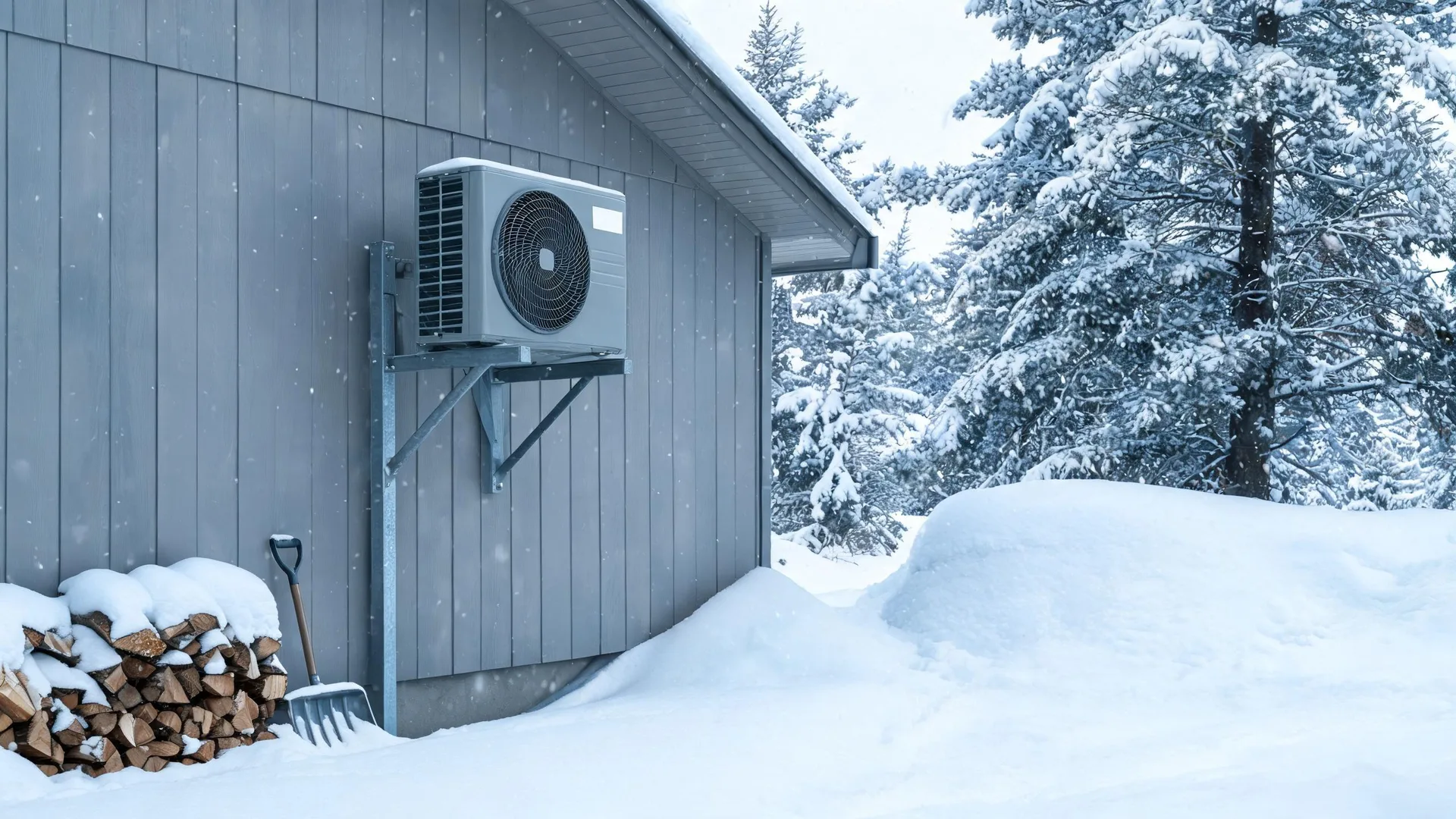
A straight swap is rarely that simple

If the new heat pump uses a different refrigerant than the old one, which is common when replacing an older system, the line set usually has to come out too, since the oil and residue left behind can contaminate the new unit. The old pad or mounting brackets may not fit the new equipment's footprint either, so plan on some adjustment there rather than assuming the new unit drops into the old spot.

Sizing a heat pump isn't about buying the biggest unit you can afford. A unit that's too big cools the air fast and shuts off before it pulls the moisture out, so the house feels clammy even at the right temperature. It also cycles on and off more than it should, and that wears the compressor down faster than steady running would. Too small, and it runs flat out on the coldest and hottest days without ever catching up. The right number comes from a load calculation, a room by room look at square footage, insulation, window area and orientation, not a guess based on the old system's size or a rule of thumb per square foot. If the house had any work done since the last system went in, new windows, added insulation, a room built on, that load calculation is the only way to know the old number still holds.

The dew point here runs 67°F on average through June, July and August, heavy even by national standards. Pulling that much moisture out of the air takes work, and a heat pump does it every time it runs. With power priced the way it is here, that extra run time costs less than it would somewhere else. So the case for spending more up front on the highest efficiency rating is weaker than the case for spending it on a unit built to keep running through what this county throws at it. Ask the installer how the model you're considering holds up over years of that moisture load, not just what its rating is on paper.