






A single-story brick house with a white-columned wraparound porch and a neighboring light-colored siding house, seen across a lawn behind a trimmed hedge, under oak branches draped with Spanish moss.

Heat Pump Installation in Vinita, OK

Tell us about the job

Takes about a minute. No obligation.

New system or replacementHeat PumpCraig County, OK
Step 1 of 2

What ZIP code is the job in?

Electricity heats 47% of homes in Craig County, more than any other fuel, with utility gas next at 29%. A heat pump fits right into that picture, since it runs on electricity and can replace an electric furnace or baseboard heat without any new fuel line to deal with. For homes already set up with electric heat, swapping in a heat pump means keeping the same hookup and gaining a system that also cools the house come summer. Homes on gas or propane can still make the switch, but that's a bigger change to the setup than this page covers.

7 months
October through April, your system heats
5 months
May through September, it cools
28°F
the average winter night it heats against
90°F
the average summer afternoon it cools against
Isometric illustration of a cutaway single-story house showing interior ductwork and an air handler connected by lines to an outdoor condenser unit on a pad beside the building.
Your system heats October through April and cools May through September.

NOAA nClimDiv, 1991–2020 normals

Heat pumps with the same rated capacity can perform very differently once it's cold outside.

Ask for the capacity at low outdoor temperature, not just the standard rating, since that's the number that tells you what the system will actually deliver on the coldest days.

Electricity here is cheap, so a heat pump earns its keep on reliability, not on the power bill

Power costs 12.24 cents a kWh statewide
Climate zone 4A
Cooling runs May through September
A standard heat pump fits a standard houseHalf the homes in Craig County were built in 1974 or earlier, half after, and sizing follows the house, not the year it was built.

September is the month to get a heat pump in, not October. Homes in Craig County start running heat that month and keep at it through April. Get the system installed before that first cold morning and the contractor has time to set it up right, test the switchover between heating and cooling, and work out any kinks while it's not yet carrying the full load. Wait for the first cold snap and you're not choosing a system anymore, you're taking whatever can get installed fastest. A heat pump put in under pressure is more likely to have something overlooked, and that's exactly the kind of thing that shows up as a reliability problem later.

A new heat pump here has to meet real efficiency minimums, and a federal credit helps cover it

Any heat pump installed here now has to meet 14.3 SEER2 for cooling and 7.5 HSPF2 for heating. That's the federal minimum for this climate zone, and it narrows the field to systems built for it. A federal tax credit is available toward a qualifying system, on top of whatever it saves you in the long run.

Find a contractor
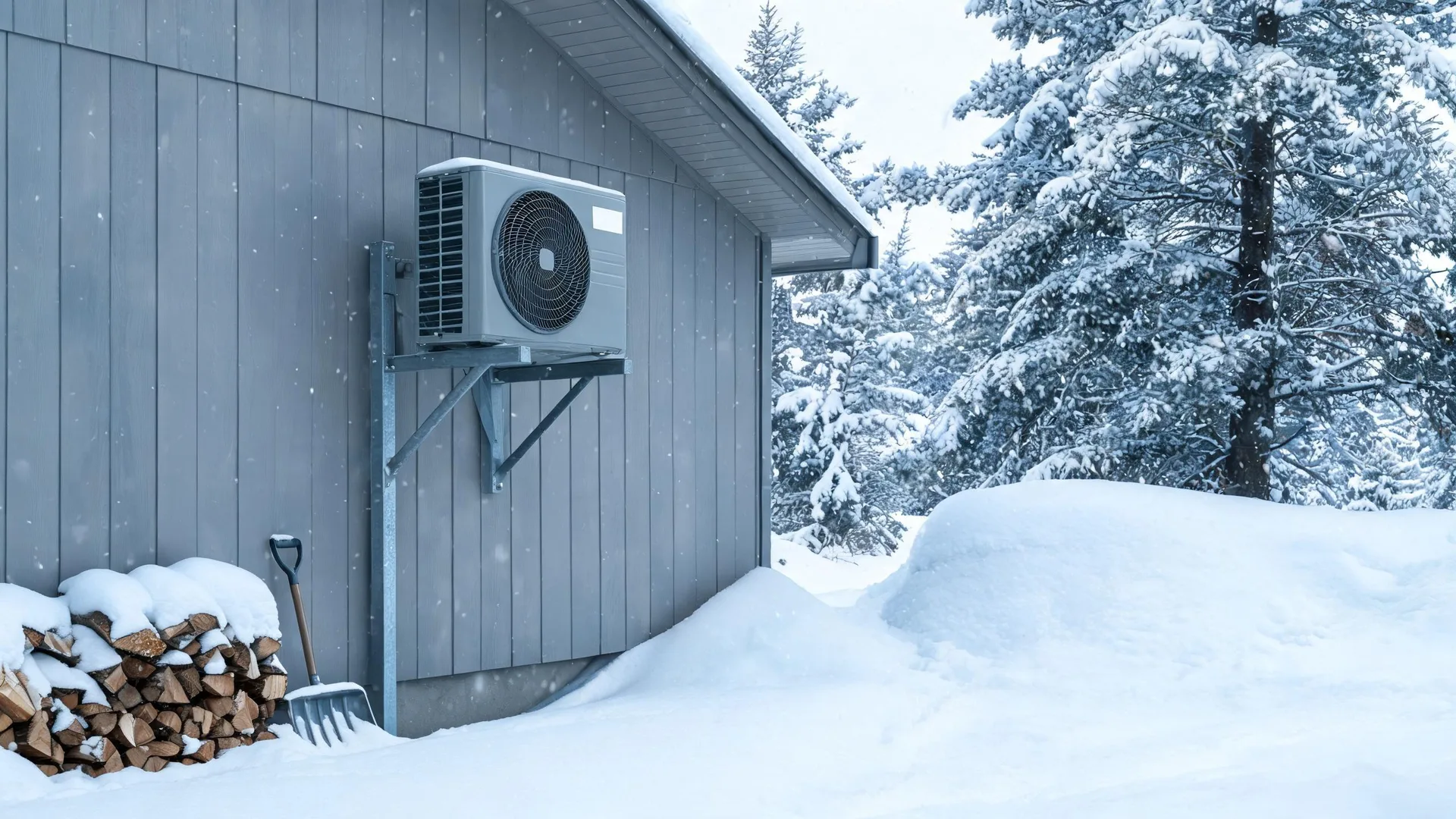
A gray heat pump outdoor unit mounted on a concrete pad next to a residential house with lap siding and stone accents.

The label tells you what it does over a season, not a moment

That SEER2 and HSPF2 pair on the label is measured over a season, not a single moment. SEER2 covers cooling, HSPF2 covers heating, and both are built from the system running across a wide range of outdoor temperatures rather than one test condition. A higher number means the compressor is doing more with less power across that whole range, not just on a mild afternoon. Where that number earns its keep is in the months the system runs the most. A heat pump that sits idle most of the year never gets the chance to pay back a higher rating. One running day in and day out, heating in the cold months and cooling in the hot ones, puts real hours on that efficiency number every single day. The rating also assumes the system is sized and installed to match the house. An oversized unit short cycles and never settles into the steady run time the rating was measured under, and an undersized one leans on backup heat strips that bypass the heat pump entirely. Either way, the number on the label stops describing what's actually happening in the house.

Sizing comes from a heat loss and heat gain calculation, not square footage

A contractor measures the walls, windows, insulation and ceiling height room by room and works out how fast the house loses heat in winter and gains it in summer. Houses the same size can need different size heat pumps depending on how many windows they have, which way they face, and what's in the walls. Going by square footage alone skips all of that.
Oversized or undersized, the house ends up uncomfortable either way

A heat pump that's too big cools or heats the air fast, shuts off, then starts again soon after. It never runs long enough to pull moisture out of the air or settle into a steady temperature. One that's too small runs constantly and still can't keep up on the coldest or hottest days, leaning on backup heat strips to make up the difference. The right size runs in long, steady cycles and holds the temperature without either problem.

Installation price comes down to what has to change in the house, not just the unit sitting outside. Ductwork is usually the biggest factor. If the existing ducts are sized right and in good shape, a contractor can connect to them and move on. If they're leaky, too small for a heat pump's airflow, or missing in part of the house, that gets fixed before the system ever turns on. The electrical panel matters too. A heat pump draws power differently than a gas furnace did, and some panels need a new circuit or a bigger disconnect to handle it. Where the outdoor unit sits and how far the line set has to run between indoor and outdoor units changes the labor as well, since routing lines through finished walls takes more time than a straightforward wall penetration. Backup heat strips, a thermostat built for the new system, and hauling away the old equipment all add their own work on top of the install itself.

Installation day starts with the old equipment coming out, if there is any, and the new outdoor unit and indoor coil going in. A tech will check the refrigerant line set, replace it if it's not rated for the new system, and connect the electrical whip and disconnect box outside. Inside, the air handler or furnace coil gets tied into the ductwork and the thermostat gets wired and set up to run the heat pump correctly, including backup heat if the system has it. Once everything's connected, the tech pulls a vacuum on the line set to clear out air and moisture before refrigerant ever flows through it. Skipping that step is one of the most common reasons a new system underperforms or fails early. Expect the tech to run the system in both heating and cooling before they leave, checking airflow at the vents and confirming the switchover between modes happens the way it should.