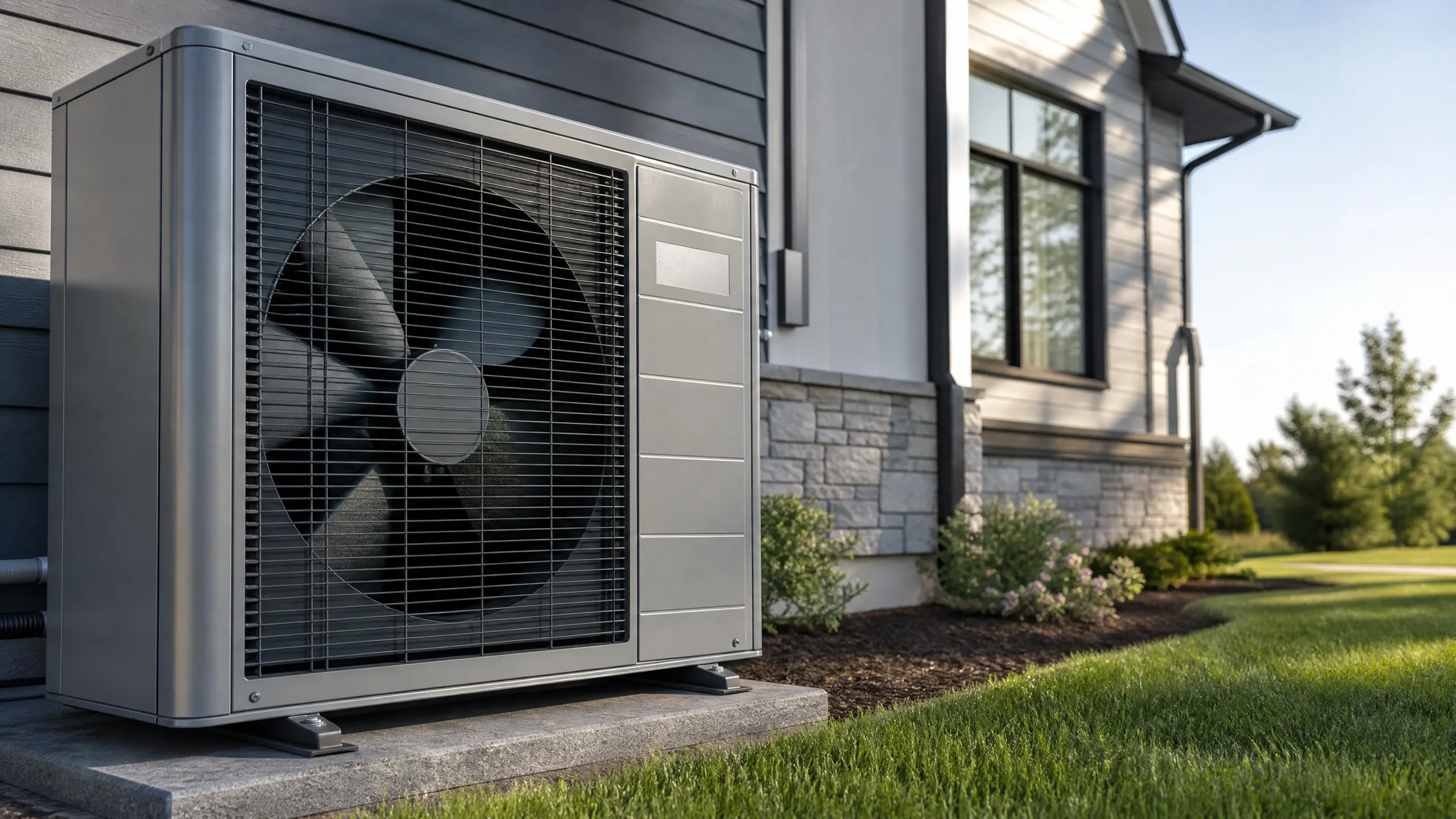





A grey heat pump outdoor unit mounted on a concrete pad against the exterior wall of a house with grey siding and stone veneer.

Heat Pump Installation in Woodward, OK

Tell us about the job

Takes about a minute. No obligation.

New system or replacementHeat PumpWoodward County, OK
Step 1 of 2

What ZIP code is the job in?

Woodward County saw 225 severe weather events between 2015 and 2024. Damaging wind caused most of that, 144 times, with 61 hail events and 4 tornadoes mixed in. A heat pump's outdoor unit sits outside year round, taking whatever comes through, so where it goes and what shields it from wind-blown debris and hail matters. There's the power side of it too. A quarter of Oklahoma households went at least a day without power in 2024. Lose power and you lose the heat pump, along with whatever makes your hot water, so that risk is worth planning for before the install, not after.

7 months
October through April, your system heats
5 months
May through September, it cools
25°F
the average winter night it heats against
92°F
the average summer afternoon it cools against
Isometric cutaway illustration of a house showing attic ductwork, an indoor air handler, furnished rooms, and an outdoor condenser unit connected by lines along the exterior wall.
Your system heats October through April and cools May through September.

NOAA nClimDiv, 1991–2020 normals

Wind damaged something in Woodward County 144 times between 2015 and 2024.

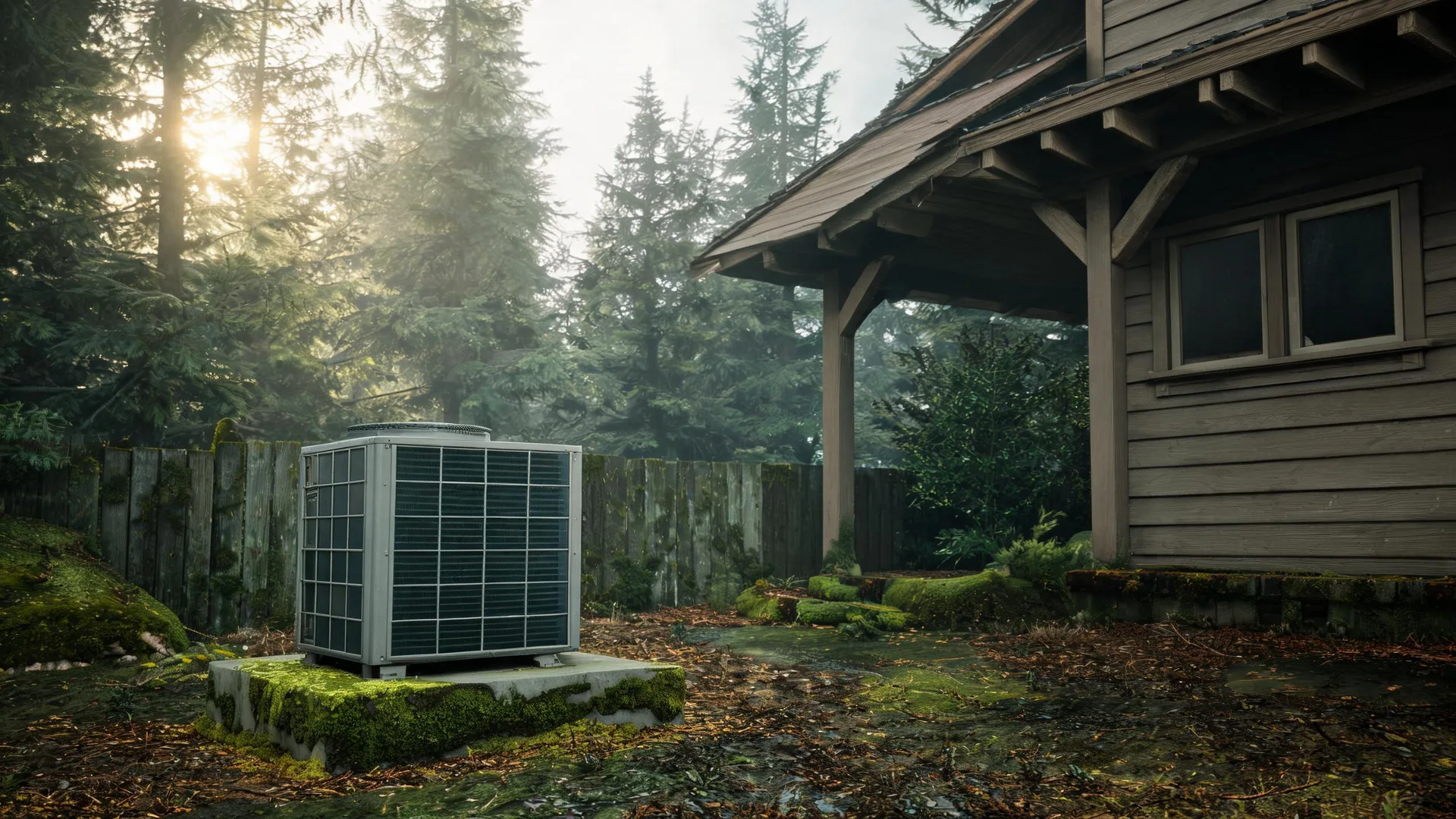
The outdoor unit has to sit through that every year and keep running.

Two seasons of work, ready before either one starts

Cooling runs May through September
Heat runs October through April
144 damaging wind events from 2015 to 2024

Any heat pump going in here has to clear a federal minimum, and Woodward County sits in climate zone 4A, which asks real work of both sides of the machine. Models made from 2023 on have to pull at least 14.3 Btu of cooling for every watt-hour they draw, and deliver at least 7.5 Btu of heat the same way. That's not a number you choose. It narrows what a contractor can offer you before the conversation even starts. Central air conditioners installed in this region face a higher bar too, 14.3 SEER2 on the smaller systems most houses use. A heat pump that clears these minimums is built to carry both your summer cooling and a good share of your winter heat without strain.

Plan for the outage before the install, not after

Pick the install site and the install contractor with the outdoor unit's exposure and the power in mind. Ask where it will sit, what will shield it from wind and hail, and what keeps heat and hot water running when the power drops. That's easier to settle now than after a storm.

Find a contractor
A gray heat pump outdoor unit mounted on a concrete pad next to the stone-accented exterior wall of a house.

Built for the long run, not just the first season

The outdoor unit installed here will run through summer cooling and a good share of winter heat, day and night, for as long as it's in the ground. Picking it on price alone skips the part that matters most in this county: whether it's sized right for both jobs and whether the install accounts for what sits outside with it. A unit that's oversized or undersized wears faster regardless of the weather, and here the weather adds its own load on top. Get the sizing and the site right at install and the machine has a fair shot at the years ahead of it.

Ask how they sized it, not just what size it is

A heat pump sized off square footage alone is a guess. A contractor should walk the house, check the windows, the insulation, the layout, and run a load calculation before naming a size. Too big and it short cycles, cooling the air fast but never running long enough to pull out humidity or settle into steady heat. Too small and it runs flat out in the hardest months and still falls short. Ask to see the calculation, not just the final number.
Ask what backs up the heat when it's coldest

Every heat pump has a point where it needs help, usually auxiliary strip heat or a paired furnace, and that balance point is worth asking about directly. Find out what kicks in below that point, how it's controlled, and whether the thermostat manages the handoff on its own. A system that switches over smoothly keeps you warm without a spike in how hard it has to work to get there.

The rating on the label tells you how much heat or cooling the unit moves for the power it draws, nothing else. A higher number means it's pulling more out of every watt it uses, so it costs less to run over the life of the machine. It doesn't tell you how big a space it can handle, and it doesn't promise comfort by itself. A well-rated heat pump installed with the wrong ductwork or the wrong size for the house will still run poorly. The rating is a measure of efficiency at a given point, usually under conditions set by whoever tests it, so real performance shifts with the weather it's actually working in. Ask what the number is based on and how it compares to what else is on the market, not just whether it clears the minimum.

Gas heats the biggest share of homes in Woodward County, 47.4%, with electricity at 38.5% and propane filling most of what's left. A heat pump doesn't replace that gas furnace outright. It usually goes in alongside it, running the cooling and carrying the heating load until the outdoor temperature drops low enough that the furnace takes over. That pairing, a dual fuel setup, is worth asking about directly if gas is already running to the house. It gives you the heat pump's efficiency most of the year and the furnace's output on the coldest nights, without leaning on strip heat to fill the gap.