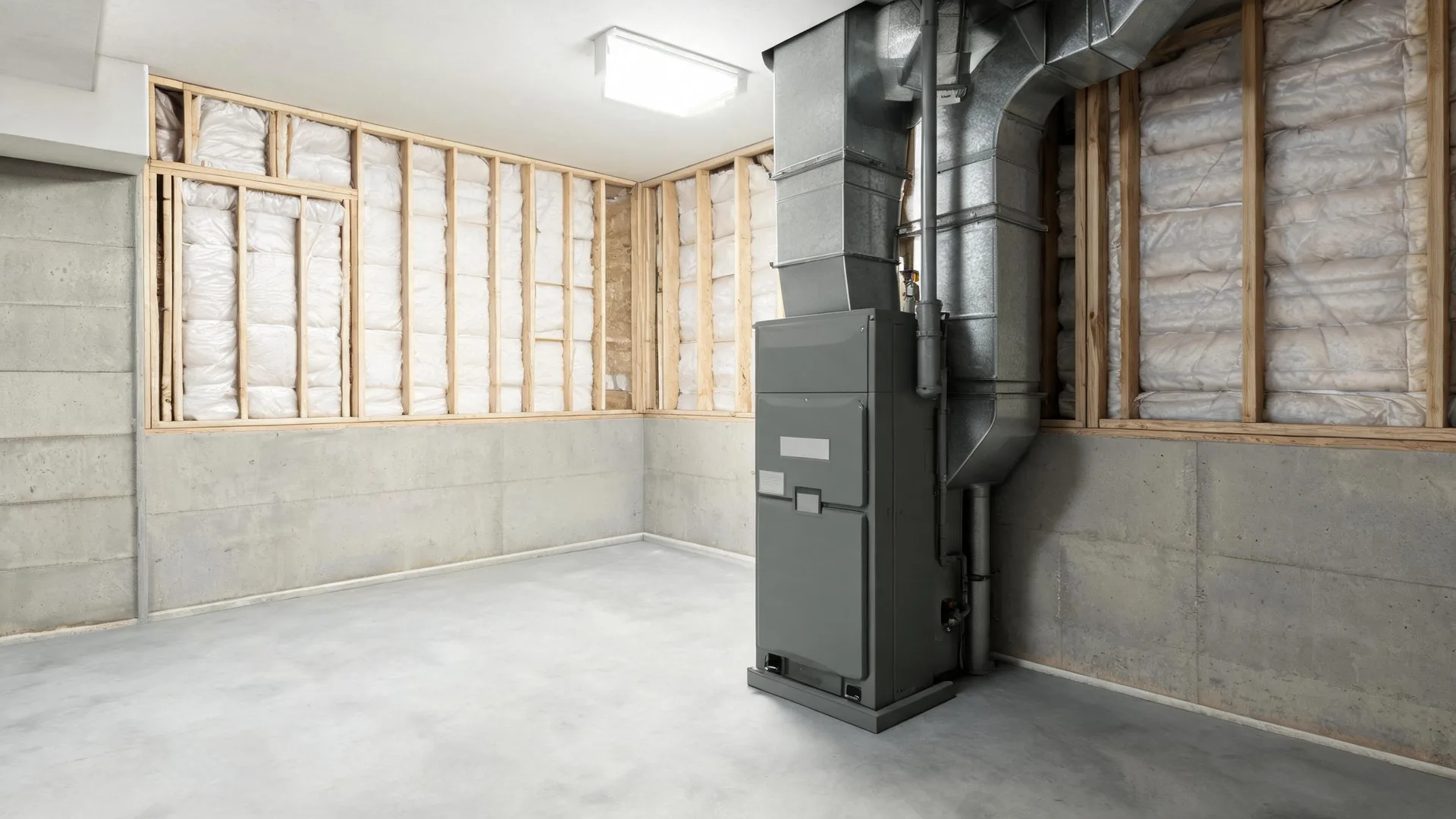
A bare concrete basement containing a gray gas furnace with metal ductwork and a vertical flue pipe, lit by a single hanging bulb.

Furnace Installation in Durant, OK

Tell us about the job

Takes about a minute. No obligation.

New system or replacementFurnace or heatingBryan County, OK
Step 1 of 2

What ZIP code is the job in?

Bryan County sees its share of storms

101 severe weather events hit Bryan County between 2015 and 2024, with wind and hail doing most of that damage. A furnace sits inside, but the vent hood, the gas line, and the electrical connection all run through an outside wall, and where that wall is matters when wind and debris are part of the picture.

Power cuts matter for a new furnace too

A quarter of Oklahoma households went at least a day without power in 2024. Even a gas furnace needs electricity to run the blower and the control board, so an outage means no heat no matter what fuel it burns. Worth asking an installer what backup options make sense for this property.

5 months
November through March, your furnace is on duty
34°F
the average winter night it heats against
80% AFUE
the federal minimum any new unit must meet
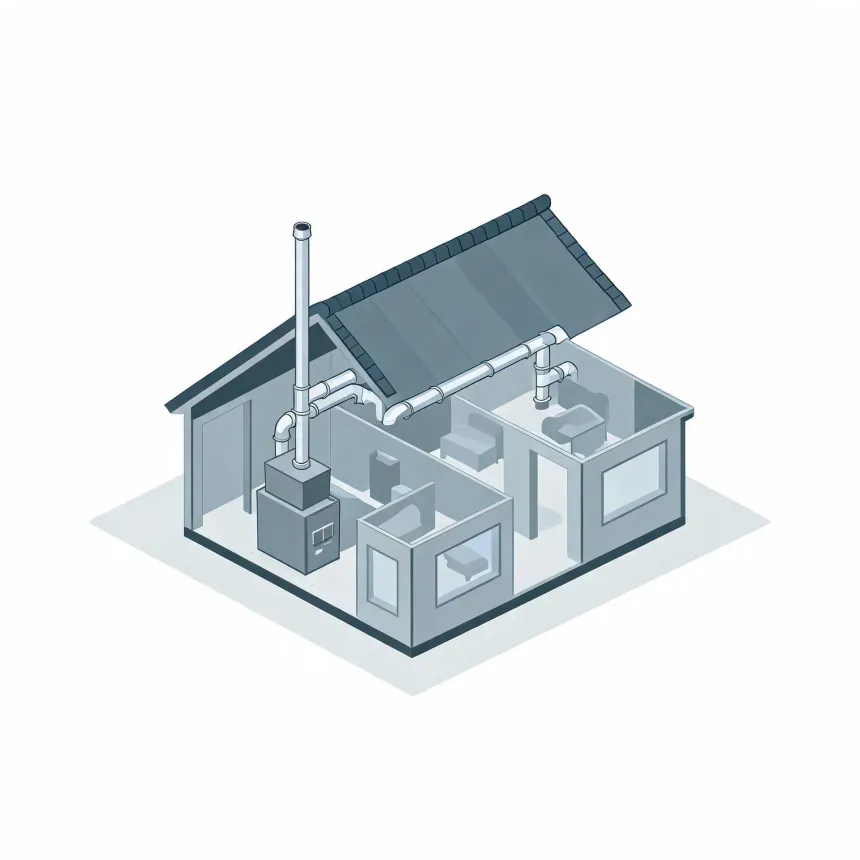
Isometric grayscale illustration of a cutaway house showing an interior furnace with a tall flue pipe and ductwork running to rooms under a partially lifted roof.
Your furnace works hardest from November through February.

NOAA nClimDiv, 1991–2020 normals

Furnaces in Bryan County run November through March.

Get a new one in before October ends and it's installed on your schedule, not during the first cold snap.

Five months of work a year

Heat runs November through March
Winter nights average 34°F
Climate zone 3A
Cheap power, so pick the furnace for fitOklahoma electricity ran $35.86 per million Btu in 2024, among the lowest in the country.

Most homes in Bryan County heat with electricity, 73.7 percent of them. Utility gas accounts for 14.4 percent, and propane covers another 9.6 percent. If your house already runs on electric heat, a straight electric furnace replacement is the simplest path since the circuit and panel capacity are likely already sized for it. If you're on gas or propane, swapping in the same fuel type means the gas line and venting stay as they are instead of being added new. Either way, matching what's already there is usually less work than switching fuels.

Replace it before the season

Replace it before the season starts, so it happens on your schedule, not in a hurry.

Find a contractor
A gray gas furnace with attached ductwork and piping installed in an unfinished concrete basement.

A short season, so buy for fit

Five months a year, and overnight lows averaging 34 in December, January and February. That's not a hard freeze working the system night after night. A furnace here doesn't need the top efficiency tier to keep up with this kind of winter, so a reliable, correctly sized system is the better place to put the money. Put the rest toward the vent hood and electrical connection holding up against weather, and toward the backup question already raised for this property.

Ask what size they're proposing, and why

A furnace sized off a chart without a load calculation is a guess. Ask the installer to walk through how they landed on that size, room by room if needed. Too big and it short-cycles, heating the air fast and shutting off before the house actually evens out. Too small and it runs constantly in the coldest stretch and still falls behind.

Ask what happens to the vent and the gas line

A new furnace sometimes means new venting, especially if the efficiency tier is changing from what's there now. Ask whether the vent pipe size and material are staying the same or changing, and whether the gas line needs any work to meet the new unit's input. These are the parts of the job that get missed in a quick bid and show up as extra cost later.

The old furnace doesn't just get unplugged and left. Whoever installs the new one has to disconnect the gas line or electrical circuit, detach the vent connection, and physically remove the cabinet, usually cut down if it won't fit through the door whole. A gas furnace gets purged and capped off safely before it's pulled, since a line can't be left open. The old ductwork connection gets adapted to fit the new unit, which isn't always the same dimensions as what's coming out. From there it's scrapped, since a used furnace isn't something most people want and the metal has value for recycling. None of this is optional work tacked onto the job. It's part of what installation means.

Installation day starts with the old unit still running, usually, so the first step is shutting off gas and power before anything gets disconnected. The new furnace gets set in place and leveled, since a unit sitting off level can affect how the burner and heat exchanger perform over time. Gas line, vent, ductwork and electrical all get connected fresh, then pressure tested and checked for leaks before anything is fired up. Once it's running, a tech checks the flame, checks static pressure in the ducts, and checks temperature rise against what the manufacturer specifies for that model. That last check matters more than it sounds. A furnace running outside its rated temperature rise is either getting too much air or too little, and either one shortens its life. Only after all that gets signed off does the job end, not when the unit turns on.