Weather here does damage
Texas County logged 363 severe weather events between 2015 and 2024. That includes 218 damaging wind events, 126 hail events, 8 tornadoes and 11 winter storms with heavy snow or ice.
Takes about a minute. No obligation.
Texas County logged 363 severe weather events between 2015 and 2024. That includes 218 damaging wind events, 126 hail events, 8 tornadoes and 11 winter storms with heavy snow or ice.
A quarter of Oklahoma households went at least 24 hours without power in 2024. A furnace with no power won't start, so a new install is also a decision about what happens here when the lines go down.

NOAA nClimDiv, 1991–2020 normals
Gas heats 64.9% of homes in Texas County.
Most furnace installs here mean swapping one gas furnace for another.



Furnace replacements here go best done in September, before anyone needs the heat on. That gives time to size the unit, schedule the work and deal with any surprise if the ductwork needs attention, none of it rushed because the house is cold. Wait until October and you're making these decisions with the first cold front already in the house. Overnight lows average 23°F here across December, January and February, so this isn't a system you want to be choosing under pressure. A furnace put in on your schedule in September is one more thing settled before the seven months of heat start.
A gas furnace still needs power to run the blower and controls. When a line goes down in a storm, the furnace goes with it unless something is in place to keep it running. That's a question worth settling at install, not after the first outage of the winter.
Find a contractor
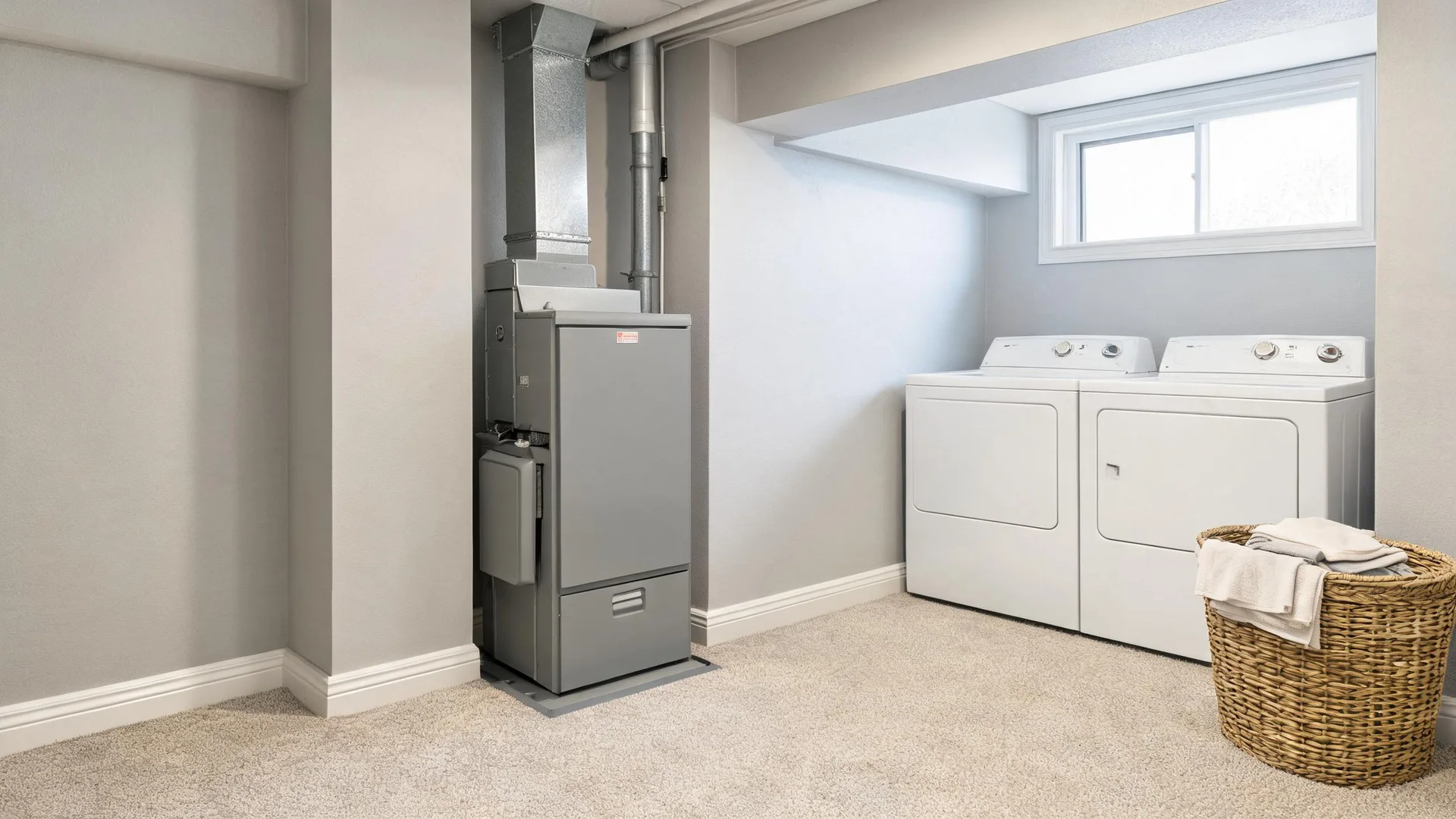
The old furnace does not just get unbolted and hauled off. Before any of that, the gas line gets shut off and disconnected, and the vent or flue pipe comes apart from the unit. If it is a forced air system, the return and supply ducts that connect to the plenum get detached, and the wiring to the thermostat and blower gets disconnected at the furnace end. On a lot of installs the evaporator coil for the air conditioner sits right on top of the furnace, so that has to be supported or set aside before the old cabinet comes out. Once it is disconnected, the furnace is usually light enough for two people to carry, cabinet and all, out through a door or up basement stairs. Whatever gets uncovered behind it, the old vent connection, the gas line stub, the duct boot, gets checked before the new unit goes in, since the new furnace may not sit in exactly the same spot or connect the same way the old one did.
A furnace sized too large for the house turns on, blasts heat fast, and shuts off again before it has run long enough to warm the place evenly. That short cycling wears on the ignitor and the blower motor, and it leaves rooms far from the furnace cold while the room with the thermostat reads fine. A furnace sized too small just runs and runs on the coldest days and never quite catches up.
A contractor works out the right size with a heat loss calculation, not by matching the old furnace's rating or guessing from square footage alone. That calculation looks at the walls, the windows, the insulation, the ceiling height, and how the house is laid out room by room. Two houses the same size can need different furnaces if one has more window area or a harder to heat layout. The old furnace might have been sized wrong from the start, so matching it isn't a safe shortcut.
Estimates for a typical Texas County home, from EIA household energy data, Oklahoma fuel prices and NOAA climate normals. Your home will differ.
Texas County falls in climate zone 4B, which asks real work of a furnace in both directions, enough heat for winter and enough efficiency to meet the code written for a zone like this. Any furnace installed here now has to turn at least 80 percent of the gas it burns into heat over the winter. That's the federal minimum for units built since November 2015, and it's not a target a contractor aims for, it's the floor everything on the market already clears. The number moves in 2028, when new furnaces will have to hit 95 percent, but that applies to units manufactured from December 18 of that year on, not what's sold today. A furnace bought now is bought against today's rule, not the one coming.