





An unfinished concrete basement containing a metal HVAC air handler, exposed wooden ceiling joists with sheet-metal ducts, a hanging bare bulb, copper pipes, and stacked cardboard boxes.

Furnace Installation in Madill, OK

Tell us about the job

Takes about a minute. No obligation.

New system or replacementFurnace or heatingMarshall County, OK
Step 1 of 2

What ZIP code is the job in?

Most homes in Marshall County heat with electricity, about 73.5 percent. Utility gas comes in well behind at 17.3 percent, with bottled or LP gas heating another 5.9 percent. If your home already runs on electric heat, putting in another electric furnace keeps things simple, since the wiring and setup are already there for it. Switching fuel types for a furnace installation means new gas lines or venting that a straight swap does not need. Worth checking which one your house was built for before deciding what to replace it with.

5 months
November through March, your furnace is on duty
34°F
the average winter night it heats against
80% AFUE
the federal minimum any new unit must meet
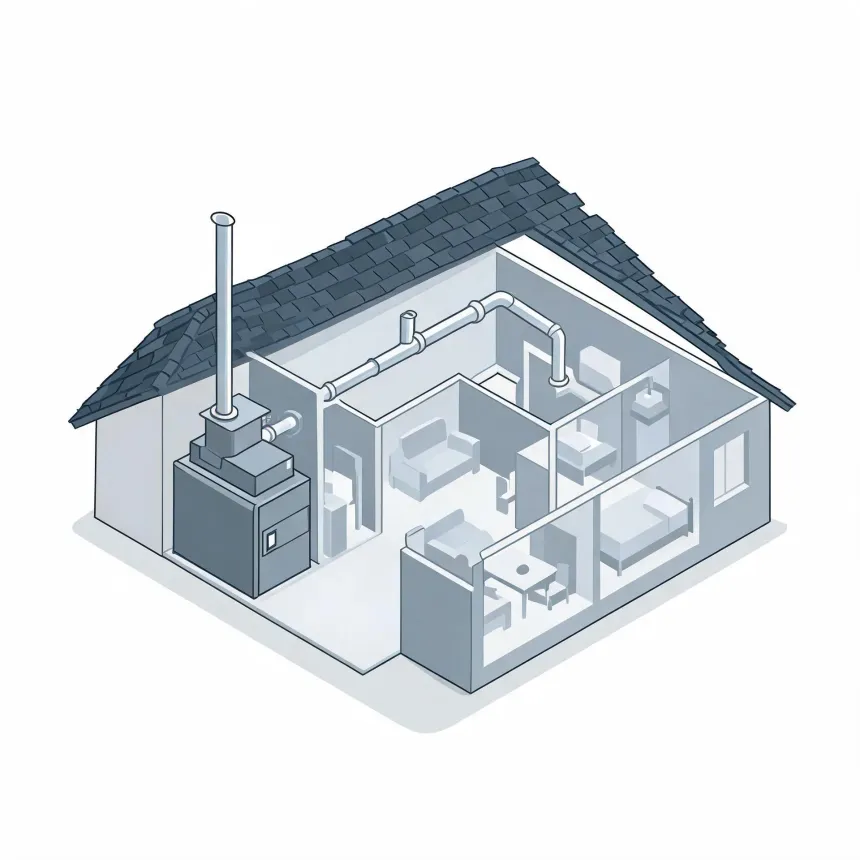
Isometric cutaway illustration of a single-story house showing interior rooms with furniture, ceiling ductwork, and a large furnace unit with a tall flue pipe in a corner room.
Your furnace works hardest from November through February.

NOAA nClimDiv, 1991–2020 normals

Electricity in Oklahoma runs about $35.86 per million Btu.

A high-efficiency furnace earns its keep slower here, so pick it for how long it lasts, not just the fuel it saves.

Nothing about Marshall County weather calls for sizing up your furnace

75 severe weather events from 2015 to 2024
25% of homes statewide lost power a day or more in 2024
26 damaging wind events from 2015 to 2024
A mild five months of workFurnace season here runs November through March, with overnight lows averaging 34°F.

Madill falls under zone 3A, which still sets a floor on furnace efficiency even with winters this short. Any non-weatherized gas furnace built from November 2015 on has to hit at least 80 percent AFUE, so that's the baseline you'll see on gas units sold here now. That minimum rises later this decade, to 95 percent AFUE. If you're installing gas heat before then, you're choosing from the current generation, not the one coming after it.

Have the new furnace in before November

Heat season here runs November through March. October is the last stretch before it starts, and that makes it the month to put in a furnace instead of waiting for the first cold night to force the issue.

Find a contractor
A man in a cap, dark shirt and tan pants carries a worn canvas tool bag up concrete steps toward a dark blue front door with a sidelight window and a large planter beside it.
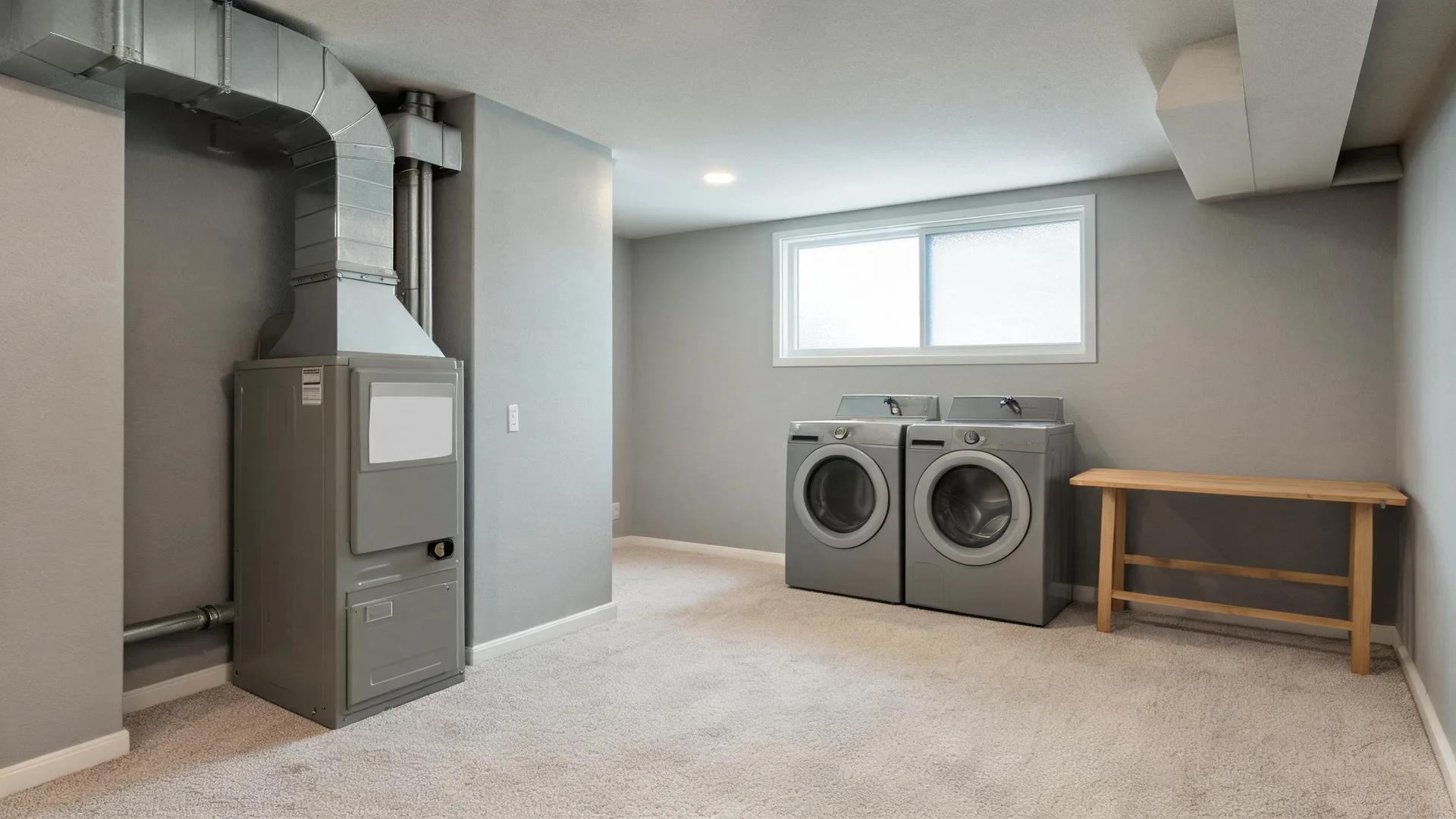
A gray residential gas furnace installed in an unfinished basement, surrounded by ductwork, a metal flue pipe, and a gas supply line.

What years on the job add up to

Half the homes in Marshall County were built in 1985 or earlier, half in 1985 or later, and that split doesn't push furnace sizing one way or the other. What matters more is that mobile homes make up 33.8 percent of the housing here. A mobile home needs a furnace built and certified for that kind of installation, not a standard model fitted into a space it wasn't designed for. Outside of matching the unit to the home it's going into, nothing about this county calls for going bigger or paying more for efficiency. A correctly sized, standard-efficiency furnace does the job here the same as it would anywhere else in zone 3A.

The size of the furnace sets the floor

A furnace has to be sized to the house, the duct system, and the climate zone, and that sizing drives which cabinet, which heat exchanger, and how much gas valve or electric heat strip the job needs. Go bigger than the house calls for and you pay more for a unit that short cycles and still doesn't heat evenly. The right size costs less and works better, so sizing isn't a place to cut corners or pad the job.
The install is its own job, not an afterthought

Swapping a furnace for the same fuel type and venting is straightforward work. Change the vent material, move the unit, or add a condensate line for a higher-efficiency model, and the labor grows along with it. Ductwork that doesn't match the new furnace's airflow needs modification too, and that's work separate from the unit sitting in the truck.

When you're comparing quotes, ask what AFUE rating each furnace carries, not just the price on the sticker. Ask about stage count too. A single-stage furnace is either on at full output or off. A modulating furnace can hold at a lower output and keep the house at a steadier temperature, without the cold-then-hot swing. Ask what the blower motor is, as well. A variable-speed motor draws less power at partial output and tends to run quieter than a fixed-speed one. Ask how each bidder plans to handle the vent and whether the ductwork needs any changes to match the new furnace's airflow, since that work changes what the install actually involves, separate from the unit itself. And ask about the warranty terms on the heat exchanger specifically, since that part is the most expensive thing to replace if it fails.

Install day starts with the old furnace coming out, not the new one going in. The tech has to disconnect the gas line or power circuit, pull the flue connection, and get the cabinet clear before anything new goes in its place. Once the old unit is out, they'll check the duct connections and the vent against what the new furnace needs, since that's where a straight swap can turn into something more. Setting the new furnace means leveling the cabinet, sealing the duct connections, and running new venting if the old material doesn't match what the new unit calls for. Gas furnaces get a line pressure check and a combustion test once they're fired up, to confirm the burners are getting the right mix of air and fuel. Before anyone leaves, the furnace should run through a full heating cycle while the tech checks the temperature rise across the heat exchanger and listens for anything that shouldn't be there.