




Single-story brick ranch houses with lit garages and large oak trees along a residential street at dusk.

Furnace Installation in McAlester, OK

Tell us about the job

Takes about a minute. No obligation.

New system or replacementFurnace or heatingPittsburg County, OK
Step 1 of 2

What ZIP code is the job in?

Pittsburg County saw 147 severe weather events between 2015 and 2024. Damaging wind caused 61 of them, hail another 67, and ten tornadoes touched down in that stretch too. A new furnace has to be installed with that in mind, not just the cold it's meant to handle. Statewide, a quarter of Oklahoma households went at least a full day without power in 2024. When the power drops, the furnace stops with it, no matter how new or well sized it is.

6 months
November through April, your furnace is on duty
32°F
the average winter night it heats against
80% AFUE
the federal minimum any new unit must meet
Isometric cutaway illustration of a small house showing a furnace unit connected to ductwork running through the interior and attic, with a chimney on the shingled roof and simple furniture in the rooms.
Your furnace works hardest from November through March.

NOAA nClimDiv, 1991–2020 normals

Your furnace only has to run about six months here, November through April.

A furnace that isn't worked year round doesn't need the highest efficiency tier to earn its keep.

Cheap power here means efficiency isn't what you're paying for, reliability is

Heat runs November through April
Winter nights average 32°F
9 winter storms from 2015 to 2024

Every furnace sold here has to clear a federal floor, and that floor is 80 percent for any unit built from November 2015 on. McAlester falls in climate zone 3A, warm with a short winter, and nothing about that zone pushes the requirement higher. That changes in December 2028, when new furnaces will have to hit 95 percent. Until then, an 80 percent furnace meets every rule this region sets. A contractor installing one today isn't cutting a corner. They're meeting the standard this zone was built around.

Pick reliable, not top of the line

It won't be worked hard here, so pick a reliable system that fits. You don't need the top efficiency model.

Find a contractor
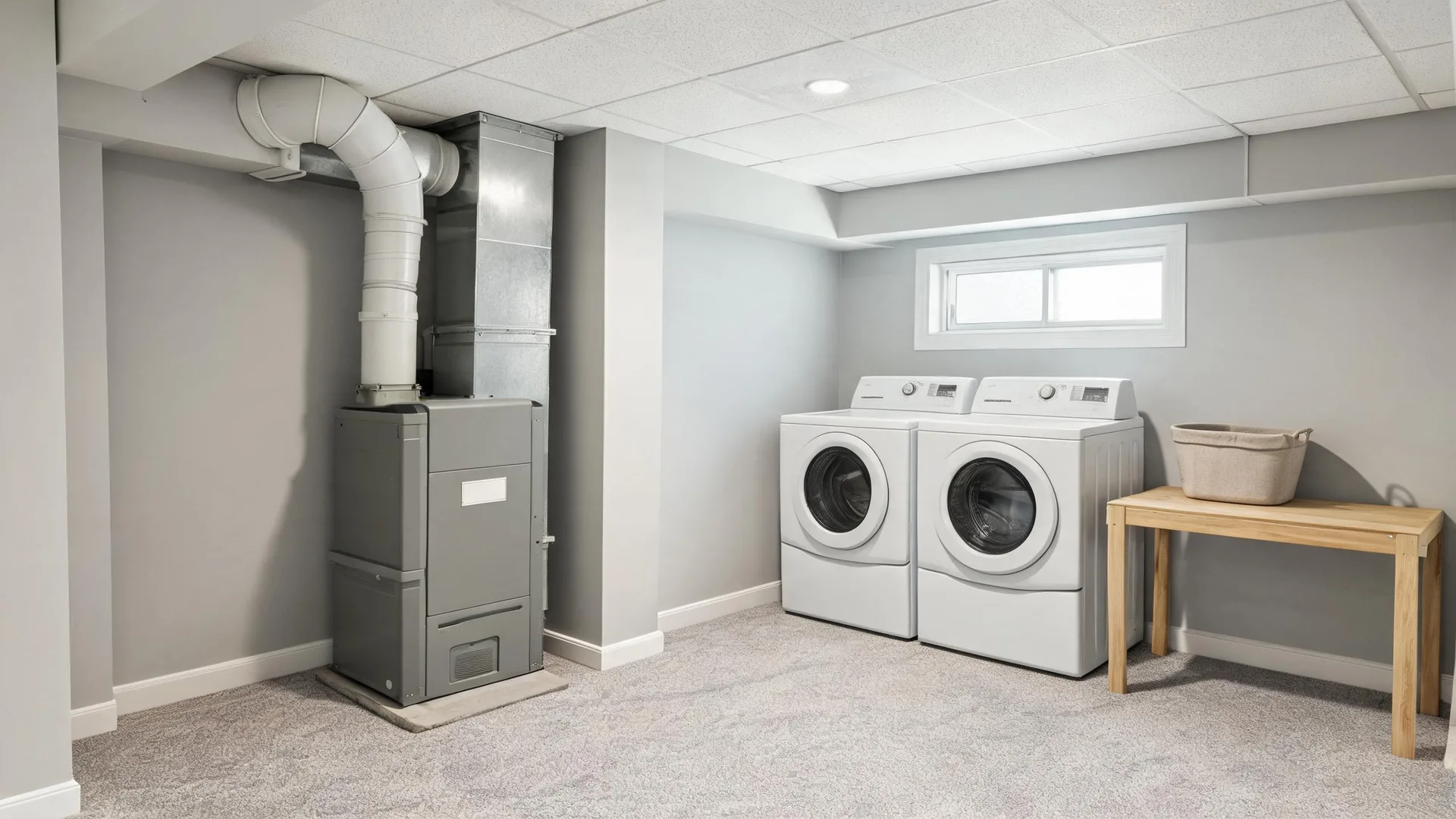
A gray high-efficiency gas furnace installed in an unfinished basement, surrounded by gas lines, a condensate drain, and sheet-metal ductwork.

Install before November, not after the first cold snap

November through April, that's the stretch. Six months of real work, then the furnace sits idle the rest of the year. Get a new one in before November and you're choosing the contractor and the unit on your own terms. Wait for a cold snap to force your hand and you're taking whatever's in stock, installed in a rush, with the house already cold.

Ask what happens when the power goes out

Some furnaces restart on their own the moment power comes back. Others need someone to relight a pilot or reset a switch before they'll fire again. Ask the contractor which kind you're buying and what, if anything, you'd need to do yourself after an outage.
Ask how the ignition system is built

A hot surface igniter does the job well but it's a wear part, and it fails more often than the rest of the furnace combined. A furnace with a standing pilot skips that part entirely and keeps running through a power cut, though it uses a small trickle of gas around the clock. Ask which one you're getting and what it takes to replace the igniter if that's the system.

The old furnace doesn't get reused once a new one goes in. A technician disconnects the gas line and caps it, pulls the electrical connections, and detaches the vent pipe or flue running to the chimney or sidewall. If the system has a heat pump or AC coil paired with it, that gets separated from the furnace cabinet before the old box comes out. Getting it out often means disconnecting the ductwork at the plenum, the sheet metal box right on top of the furnace, so the cabinet can be wheeled or carried free. Whoever installs the new unit should haul the old one away as part of the job, since furnaces are heavy and awkward for one person to move alone. The only parts worth anything are scrap steel and copper, and that rarely covers more than a fraction of the labor to remove it.

Electricity heats 53.9 percent of homes in Pittsburg County, more than any other fuel. Gas, either utility or bottled, still heats about four in ten homes, so a furnace is far from rare here. If the house already runs on gas, replacing the furnace with another gas unit is usually the straightforward path, since the line, the vent and the gas meter are already in place. Switching fuels on a furnace install means adding what the other fuel needs, a gas line run or a dedicated electrical circuit, and that's a bigger job than swapping one furnace for another. Ask the contractor what your house is already set up for before you decide what to replace it with.