A row of single-story brick houses with dark shingled roofs stands along a dry grass strip beside a tall weathered wooden fence, under large overhanging oak branches and an overcast sky.

Furnace Installation in Tulsa, OK

Tell us about the job

Takes about a minute. No obligation.

New system or replacementFurnace or heatingTulsa County, OK
Step 1 of 2

What ZIP code is the job in?

Weather here takes a toll on outdoor equipment

Tulsa County logged 525 severe weather events between 2015 and 2024, including 276 damaging wind events and 215 hail events. A furnace installation usually comes with outdoor equipment tied to the system, and that equipment sits outside through all of it.

The power doesn't always stay on

A quarter of Oklahoma households went at least 24 hours without power in 2024. A gas furnace still needs electricity to run the blower and controls, so an outage can mean no heat even with the gas line intact.

7 months
October through April, your furnace is on duty
29°F
the average winter night it heats against
62%
of homes here heat with gas, so most furnaces here burn gas
80% AFUE
the federal minimum any new unit must meet
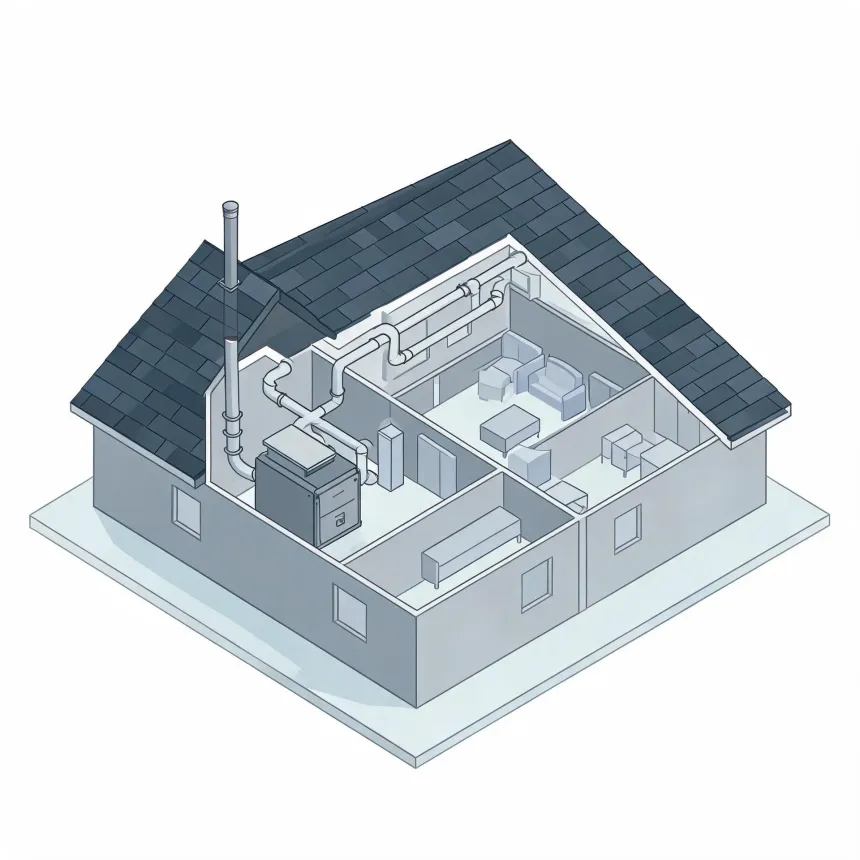
Isometric cutaway illustration of a single-story house with a dark shingled roof, showing interior rooms with furniture, ductwork, a flue pipe, and a furnace unit.
Your furnace works hardest from November through March.

NOAA nClimDiv, 1991–2020 normals

Gas heats 62.1% of homes in Tulsa County, more than any other fuel.

A gas furnace is the system most installers here work on week in and week out.

Ten winters of storms a year is why fall is the time to put this in, not January

Heat runs October through April
Winter nights average 29°F
10 winter storms from 2015 to 2024

Natural gas ran Oklahoma homes $13.54 per million Btu in 2024, on the low side for the country. That changes what's worth paying for up front. A high-efficiency furnace costs more to install, and here it takes longer to earn that money back in lower gas bills than it would somewhere with pricier energy. That doesn't make efficiency a bad choice, it just means it shouldn't be the only thing driving the decision. What matters more in Tulsa County is whether the furnace and anything installed with it can take a hard wind or hail event and keep running when the power blinks.

Plan the install around the outages, not just the cold

Ask where the outdoor equipment will sit and what will shield it from wind and hail. Ask what happens to the blower and controls when the power drops, and whether a transfer switch or battery backup makes sense for this install. Settling that now, while the system is being put in, is easier than adding it later.

Find a contractor
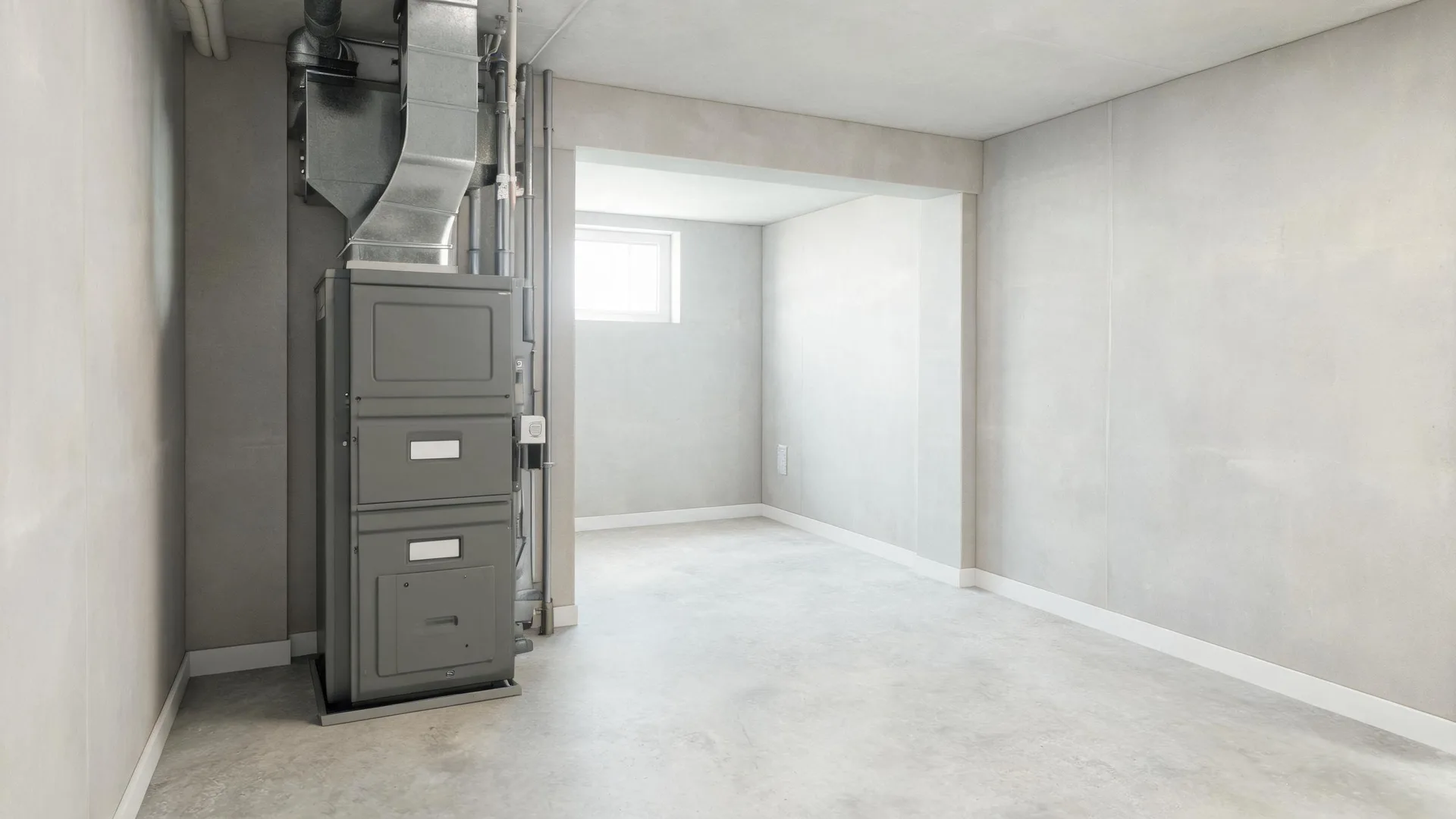
A gas furnace with attached ductwork, gas piping, and condensate lines installed in a concrete-block basement.

The number on the label is a lab result, not a promise

The AFUE number on the label tells you how much of the fuel burning in that furnace turns into heat for the house, and how much goes straight out the flue. A furnace rated higher keeps more of what it burns. That rating comes from controlled testing, not from how the furnace behaves on the coldest night of the year or after it's been running for a decade. A furnace holds that efficiency as long as the heat exchanger is clean and intact, the burners fire properly, and the blower moves the right amount of air across them. Let dust cake the blower wheel or a burner go out of adjustment and the furnace starts losing ground on the number stamped on its label. Efficiency rating and heat output are two different things too. A high-efficiency furnace isn't necessarily a bigger furnace, and a contractor sizing the install has to work out the heat load of the house separately from whichever rating you choose.

A furnace sized by square footage alone is a guess

Square footage gets you in the neighborhood, nothing more. A contractor working out the real heat load walks the house, counts the windows and doors, checks how much insulation is in the attic and walls, and looks at ceiling height in every room. Two houses the same size can need different furnaces because one loses heat faster than the other.

Too big is its own problem, not a safety margin

An oversized furnace heats the house fast, shuts off, then has to fire again soon after. That short cycling wears out the ignition system and the blower motor well before their time, and it leaves rooms farther from the furnace colder than the rest of the house because the air never runs long enough to even out. Bigger isn't a backup plan, it's a furnace working against itself.

An unfinished basement containing a gas furnace with ductwork in the foreground and miscellaneous stored items along the far concrete wall.

A high-efficiency gas furnace would save about $90 a year to run in Tulsa County compared with a gas furnace.

  • A high-efficiency gas furnace$490 a year
  • A gas furnace$580 a year

Estimates for a typical Tulsa County home, from EIA household energy data, Oklahoma fuel prices and NOAA climate normals. Your home will differ.

Tulsa County falls under zone 3A in the 2021 energy code, and that sets a floor on what can go into this installation. Any gas furnace built from November 19, 2015 on has to turn at least 80 percent of the gas it burns into heat over the winter. That's the baseline here, not a feature to ask for. The number moves again on December 18, 2028, when new furnaces have to hit 95 percent, so a furnace bought well ahead of that date can still be built to the older standard and installed legally. Either way, the federal tax credit for qualifying high-efficiency furnaces is worth asking a contractor about before deciding which rating to buy.