







A nighttime view of a residential street lined with single-story brick houses and large trees lit by warm exterior lights.

Heat Pump Installation in Durant, OK

Tell us about the job

Takes about a minute. No obligation.

New system or replacementHeat PumpBryan County, OK
Step 1 of 2

What ZIP code is the job in?

Ask what the unit is rated to do in cold weather, not just how it performs in mild conditions. Every heat pump loses capacity as the temperature drops, and the point where it needs backup heat to keep up varies a lot between models. Ask what size the contractor is proposing and why, since a unit that's too big will cycle on and off and never run long enough to dehumidify the house, while one that's too small will run constantly and still fall behind on the coldest days. Ask about the backup heat source, whether it's electric strip heat or something else, and how the system decides when to switch over. Ask what sound level to expect from the outdoor unit, especially if it sits near a bedroom window. And ask what the warranty actually covers, parts versus labor, and whether it's tied to having the system serviced on schedule.

5 months
November through March, your system heats
5 months
May through September, it cools
34°F
the average winter night it heats against
93°F
the average summer afternoon it cools against
Isometric cutaway illustration of a single-story house showing interior ductwork, an indoor air handler and furnace unit, and an outdoor condenser connected by a line, on a white background.
Your system heats November through March and cools May through September.

NOAA nClimDiv, 1991–2020 normals

The efficiency rating on the label is measured under mild test conditions, not the coldest day you'll see.

Ask how that unit performs in cold weather too, since a high rating on the label doesn't guarantee it anywhere near the same performance when it's actually cold outside.

October puts a heat pump in place before the first cold night asks anything of it

Cooling runs May through September
Heat runs November through March
Power costs 12.24 cents a kWh statewide
Where Durant gets its heatElectricity already heats 73.7% of homes in Bryan County.

Electricity in Oklahoma ran 12.24 cents per kilowatt-hour in 2024, cheaper than most of the country. That changes what's worth paying extra for. A heat pump with the highest efficiency rating on the shelf costs more up front, and at these power rates it takes longer to earn that money back through lower bills. Putting that money instead toward a unit sized right for the house, or a backup heat source that holds up during an ice storm, is often the better trade. Ask the contractor what a higher-rated model actually buys you here, running on power this cheap, before paying more for it.

Replace it before the season

Replace it before the season starts, so it happens on your schedule, not in a hurry.

Find a contractor
A man in a cap, dark long-sleeve shirt and brown pants carries a canvas tool bag up wooden porch steps toward a navy front door beside a potted shrub.
A gray heat pump outdoor unit mounted on a concrete pad next to the stone-accented exterior wall of a house.

What's being priced isn't just the unit

The installed cost of a heat pump comes from more than the equipment sitting in the box. The outdoor unit and air handler are only part of what's being priced. Line sets need to be run or replaced, the electrical circuit has to be sized to match the new equipment, and a contractor may need to add a disconnect or upgrade a breaker to meet code. If the ductwork wasn't built for a heat pump's airflow, modifying it adds to the job. Backup heat strips need their own wiring, sized to carry that load. Removing and hauling away the old system is part of the job too, not an extra. None of this shows up on the sticker price of the unit itself, which is why quotes for equipment that looks the same on paper can land far apart. The difference is usually in what has to happen around the equipment, not the equipment.

The old system comes out

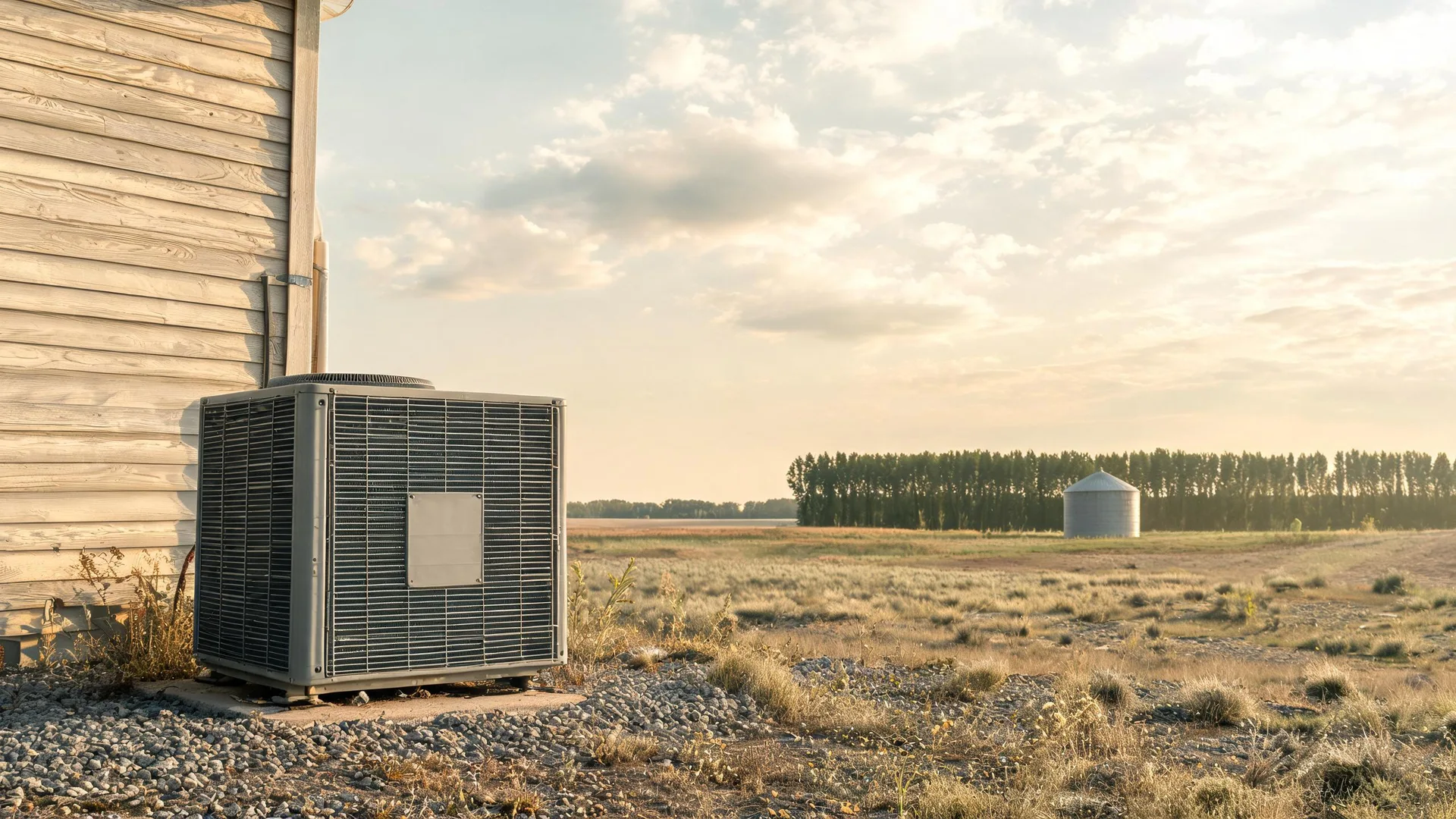
A contractor disconnects the refrigerant lines, pulls the old outdoor unit and air handler, and hauls them away. If the old system used a furnace alongside an AC coil, both come out if the heat pump is replacing that whole setup. Refrigerant in the old lines has to be recovered properly, not vented, so factor that step into the job.
What stays behind matters

Line sets, ductwork and the electrical circuit from the old system often get reused, but only if they match what the new heat pump needs. Old line sets sized for a smaller system can restrict flow for a bigger one. Ductwork built around a furnace's airflow may not move enough air for a heat pump running longer, gentler cycles. Ask the contractor to check these against the new equipment instead of assuming they carry over.

Sizing a heat pump starts with a load calculation, not a tape measure around the old unit's nameplate. A contractor works out how much heat the house loses on the coldest days and how much it gains on the hottest, accounting for windows, insulation and how the rooms are laid out. That number drives everything else. Too big and the unit short cycles, blasting the house to temperature and shutting off before it's pulled the moisture out of the air, so it feels clammy even when the thermostat reads right. Too small and it runs nonstop on the extreme days and still can't keep up, leaning hard on backup heat to make up the difference. A unit sized off square footage alone, or matched to whatever was there before, skips the only calculation that actually tells you what the house needs.

Installation day starts with the outdoor unit and air handler going in, but most of the day is spent on connections, not the boxes themselves. A contractor runs or reuses line sets, pulls a new circuit if the old one doesn't match the load, and sets the disconnect where code wants it. The refrigerant lines get brazed, pressure tested for leaks, then pulled into a vacuum to clear out moisture and air before any refrigerant goes in. Skipping that vacuum step is one of the more common causes of an early failure, so it's worth asking whether it was done and for how long. Once the system runs, the contractor checks refrigerant charge against the manufacturer's numbers, confirms airflow at the vents, and walks through the thermostat and backup heat settings before calling it done.