This county sees real storms
Delaware County recorded 117 severe weather events between 2015 and 2024. That includes 47 damaging wind events, 40 hail events, and 18 tornadoes touching down.
Takes about a minute. No obligation.
Delaware County recorded 117 severe weather events between 2015 and 2024. That includes 47 damaging wind events, 40 hail events, and 18 tornadoes touching down.
A quarter of Oklahoma households went at least 24 hours without power in 2024. A heat pump depends on electricity, so an outage here means no heat, no cooling, and no hot water if that's electric too.

NOAA nClimDiv, 1991–2020 normals
Electricity already heats more than half the homes in Delaware County.
A heat pump replacing an electric furnace or baseboard heat is swapping one electric system for another, nothing new for the wiring or the panel.



Heat here runs October through April, about seven months straight once the cold sets in. Install before September and the new system is ready before it has to carry the load. Wait until the first cold snap and you're picking a system in a hurry, maybe going without heat for a few days while parts get ordered. Spring works too, right after cooling season ends in May, when a contractor has time to size the unit properly instead of rushing a same-day swap.
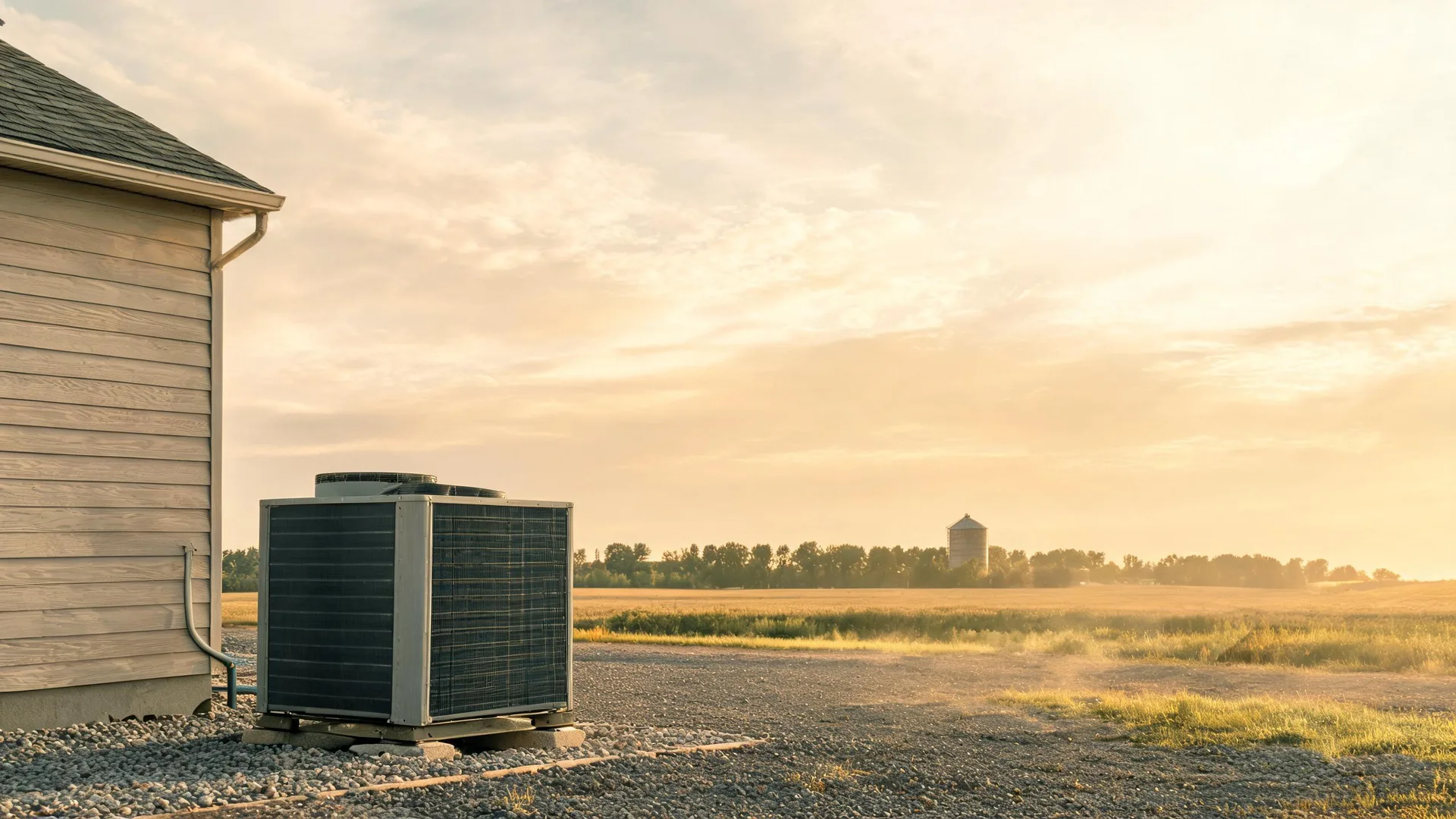
A heat pump installer can size the outdoor unit's spot with storms in mind: away from falling limbs, clear of fence lines hail can drive debris across, set where service is easy after a bad week. Worth asking too about backup for the house, since this system runs on electricity for heat, cooling and hot water alike.
Find a contractor
A heat pump outdoors runs through every one of those 40 hail events, plus the long muggy stretch and the long cold stretch on either side of them. It doesn't get an off season. Ask whatever contractor you're comparing how they size the unit for that, not just for the square footage of the house. A system sized right for sustained summer and winter runs holds up better than one picked on price alone.
Whatever heated and cooled the house before gets disconnected and hauled off, outdoor unit, indoor coil or air handler, and the old thermostat. If it ran on gas, the line gets capped off by whoever is licensed to do that. A heat pump install isn't one unit added next to another, it's a full swap.
Ductwork, the electrical disconnect box, the pad outside, sometimes the refrigerant lines, can often stay if they're in good shape and sized right for the new equipment. A contractor checks each piece rather than replacing it on principle. Reusing what's sound is normal, not a shortcut.
A few things drive what an installation actually takes to pull off. Size matters most. A unit too big for the house short cycles, kicking on and off instead of running steady, and one too small struggles to keep up when the weather turns hard. Getting that right means a contractor measuring the house, not guessing off square footage alone. Ductwork condition matters too. If what's there is leaky or sized for the old system, it may need rework before the new unit can move air the way it's supposed to. The electrical panel has to support the new equipment, and older panels sometimes need an upgrade to do that safely. None of this is optional work tacked on to pad a bid. It's what makes the system perform the way it's rated to once it's running.
Delaware County falls under zone 4A, a climate that works both the heating and cooling side of a heat pump hard over the year. Federal rules set a floor for that: any split-system heat pump made from 2023 on has to deliver at least 7.5 Btu of heat for every watt-hour it uses in winter, and pull at least 14.3 Btu of heat out for every watt-hour in summer. That second number runs even higher here. The Southeast region, which includes this county, requires 14.3 SEER2 on central air equipment under 45,000 Btu/h, above what the rest of the country has to meet. A contractor quoting a system for this address has to start from that number, not the national minimum. It narrows what can legally go in, before square footage or budget ever come up.